Jon shared an article with the team this week on what really happens inside your body during a marathon — the heart, the muscles, the fuel tank, and the wall. Here's his note, and a quick rundown of why it's worth ten minutes of your taper.
Happy Friday! I just read a very cool article focusing on the biomechanics of what your body is going through, physically and mentally, during your long runs, and ultimately on race day. Enjoy — best of luck on your continued training and fundraising! Stay happy, healthy and hydrated!!! :-) We Got This!!!!
The article is "Here's What Actually Happens to Your Body When You Run a Marathon" by Matteo Sargenti at The Running Week. The short version: a marathon isn't one effort, it's every system in your body solving a problem at the same time, for hours. Here's the map.
Your heart works harder even when your pace doesn't change
Early on, your heart and lungs ramp up to feed oxygen to working muscles. But over hours, something called cardiac drift kicks in: dehydration, rising body temperature, and fatigue force your heart rate to climb even at a steady pace. If you've ever wondered why mile 18 at your easy pace feels nothing like mile 3 at your easy pace, this is a big part of the answer — and it's an argument for pacing by effort, not just by the watch.
Muscle damage is the point — but it accumulates
Every stride creates tiny micro-tears in muscle fibers. In training, that's the mechanism that makes you stronger. Over 26.2 miles, the volume of that stress piles up far beyond a normal workout, which is why stairs become your enemy for two or three days after the race. The article's practical takeaway matches what we tell new marathoners every year: gentle walking after the race actually speeds recovery.
You're running a race and a cooling operation at once
Most of the energy you burn doesn't move you forward — it becomes heat. Your body sheds it by pushing blood to the skin and sweating, and that sweat takes fluid and electrolytes with it. Manage it and you're fine; ignore it and performance drops fast. Jon's sign-off — stay hydrated — isn't just a catchphrase.
The wall is a fuel problem, not a character problem
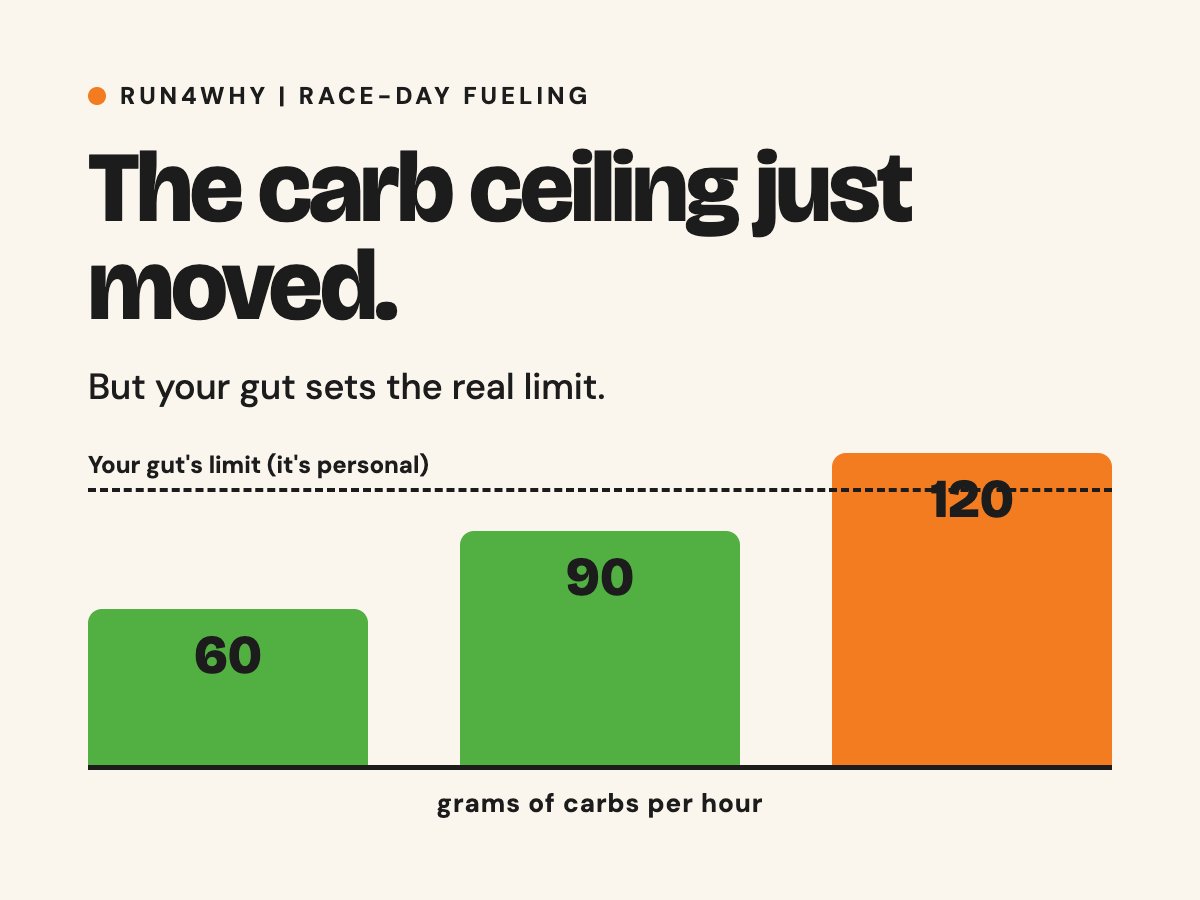
You start the race burning stored glycogen, your most efficient fuel. Somewhere past halfway, those stores run low and your body leans on fat, which holds more energy but converts to usable fuel more slowly. Push that shift far enough — typically somewhere between miles 17 and 22 — and you get the wall: effort spikes, legs go heavy, even thinking gets harder. The fix is boring and reliable: take in carbs at regular intervals from early in the race, before you feel like you need them. Practice it on your long runs now, not on November 1.
Your brain is running the whole show
One piece we especially liked: the brain isn't a passenger. It's monitoring temperature, fuel, and fatigue the entire race, and when things get stressful it deliberately turns up your sense of effort to protect you. That feeling at mile 22 that you can't go on isn't weakness — it's a safety system you can learn to negotiate with. That's a skill, and long runs are where you build it.
Read it, then go run
The full article is worth your time — read it here. None of this is medical advice; if you're managing a health condition, check with your doctor about fueling and hydration specifics. And if you're figuring out how to put this into your build for New York, our training resources are a good place to start. Eleven weeks out. We got this.