September is the month that breaks marathon training. Nine weeks out from New York, the long runs are finally long enough to hurt, and race day is still far enough off that it does not feel real. This is where people get injured, get discouraged, or quietly stop showing up on Saturday or Sunday mornings.
It is also where the marathon actually gets built. Everything between now and the middle of October is the work. What comes after is just protecting it.
Here is how we think about the next nine weeks.
What the peak block actually looks like
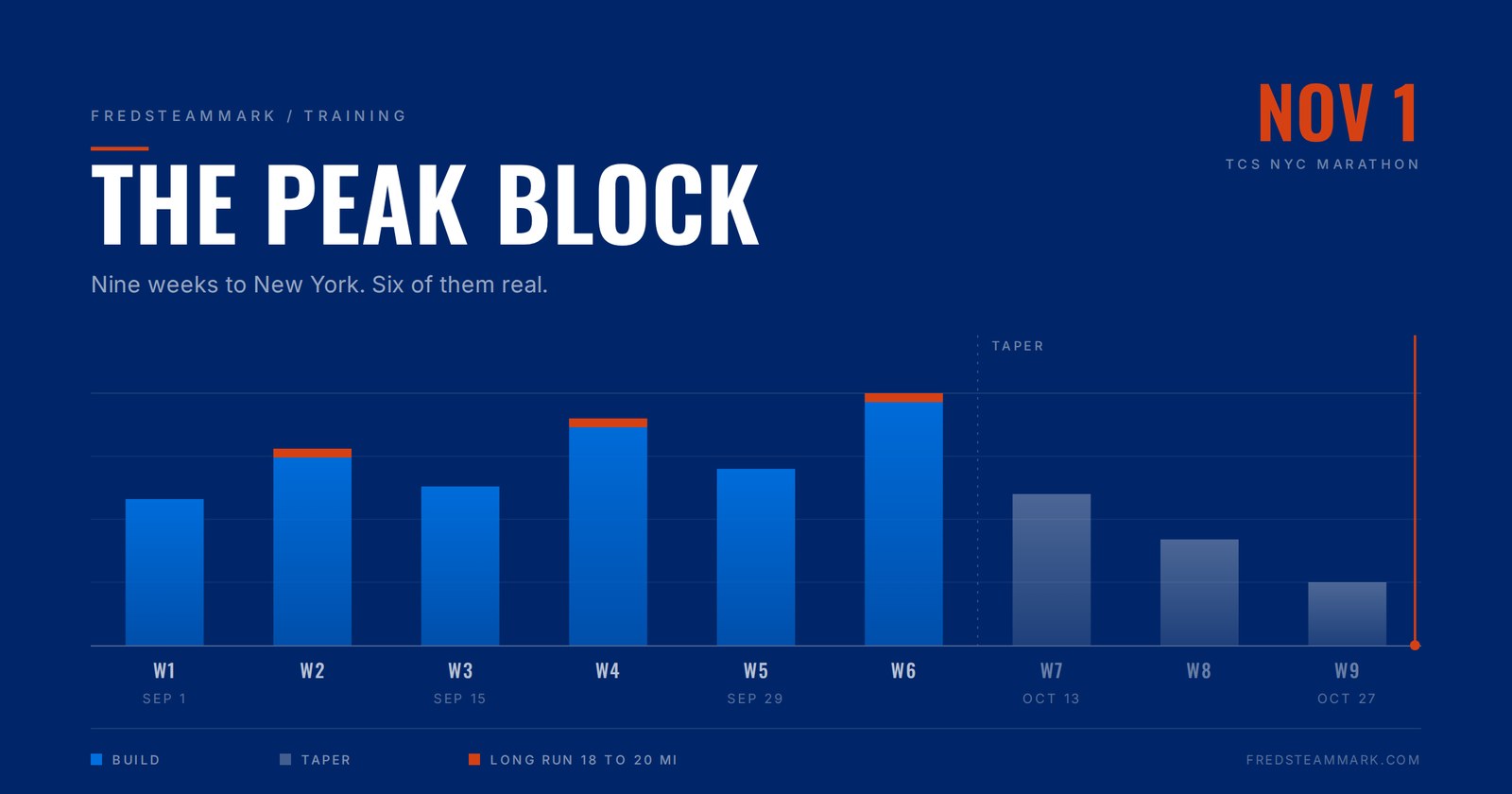
Race day is Sunday, November 1. Count backward and the taper starts around October 11. That leaves roughly six weeks of real training and three weeks of staying out of your own way.
In those six weeks, most of our runners will get in three long runs of 16 to 20 miles, spaced about two or three weeks apart, with something in the 12 to 14 mile range in between. If you have never run past 16, respect the jump to 18. Add distance to one run at a time, not to every run in the same week.
Weekly mileage matters more than any single weekend long run. A runner averaging 30 miles a week with a 20 mile long run is in better shape than a runner averaging 18 with the same 20. If your long run is more than about 40 percent of your week, the long run is not the problem. The other six days are.
The long run is not the only run that counts
The most common September mistake is the weekend hero. Twenty miles on Saturday, nothing until Wednesday, four easy miles, then twenty again. That pattern builds soreness, not fitness.
What works better:
- Three to four easy runs a week at a pace where you can hold a conversation in full sentences. Almost everyone runs these too fast.
- One run with some quality in it. A few miles at goal marathon pace inside a medium-long run does more for most of us right now than anything on a track.
- One long run, run slow. Sixty to ninety seconds per mile slower than goal pace is normal and correct. The long run trains your legs to keep going, not to go fast.
- One full rest day. Not a cross-training day. A rest day.
None of that is complicated. Doing it for six straight weeks is the hard part.
Cumulative fatigue is the point. Injury is not.
You are supposed to feel tired in September. Heavy legs on Monday, flat on Tuesday, coming back around by Thursday. That is the block working.
What is not normal is pain that changes how you run. The line we use is simple. If it makes you limp, alter your stride, or if it hurts worse at mile four than it did at mile one, stop the run. Soreness spread across a muscle is usually fine. Sharp pain in one specific spot, particularly in a bone or a tendon, is not something to run through.
Take the day. One missed run in September costs you nothing. Six weeks in a boot costs you the race. And if something is not clearing up after a few easy days, see a doctor or a physical therapist rather than asking the internet.
Every long run from here is a rehearsal
The distance is only half of what the long run is for. The rest of it is finding out what works before it matters. From here on, run them in the clothes, the shoes, and the fuel you plan to use on November 1.
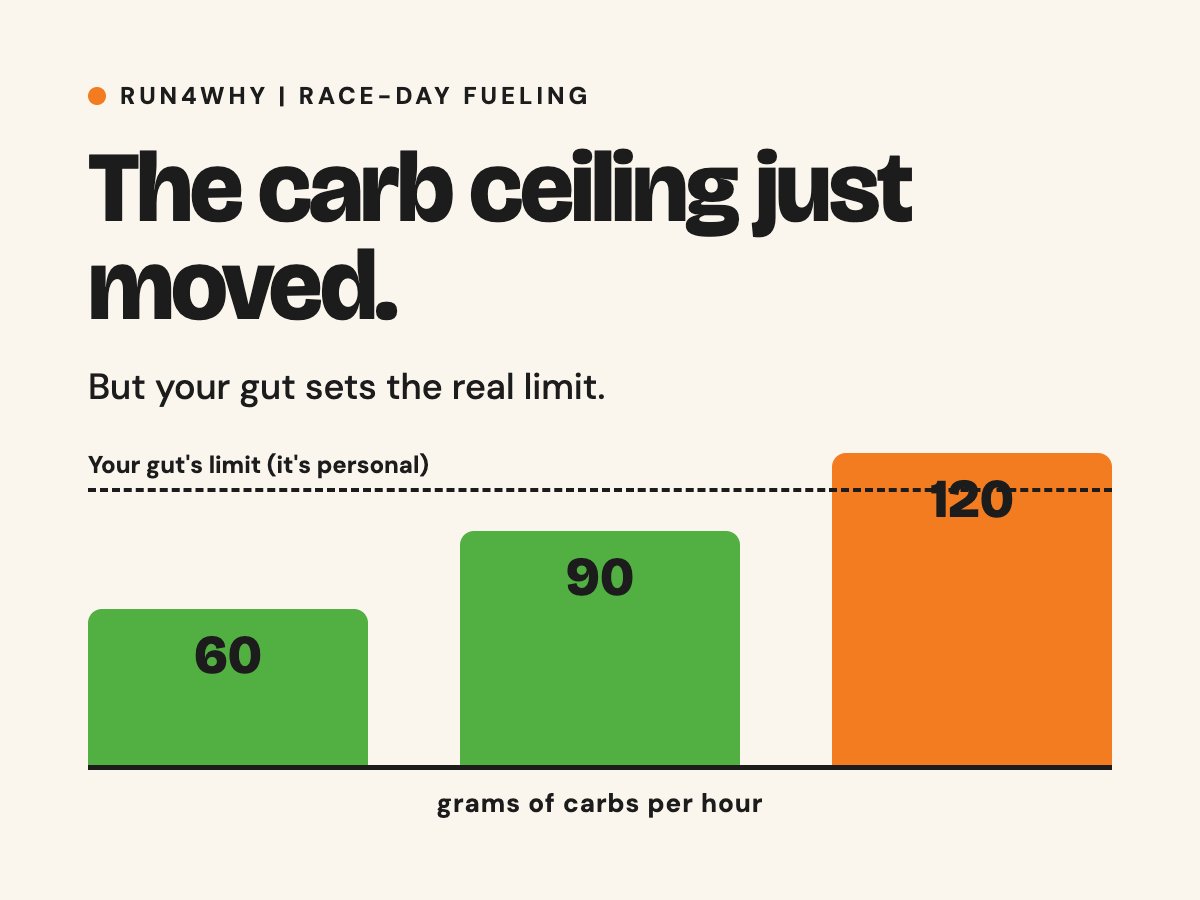
- Fuel on a clock, not on feel. Take a gel every 30 to 45 minutes starting around mile four. If you wait until you feel bad, you are already behind. Find out now which flavor your stomach still tolerates at mile 18.
- Practice drinking on the move. New York has fluid on the course roughly every mile from mile three. Grabbing a cup at pace is a skill, and the first time you try it should not be race day.
- Race in shoes with miles on them. Forty to a hundred miles is the range we like. Not brand new, not worn out.
- Run one long run at your actual start time. A late morning start on a body that has been awake since four in the morning feels different. Better to learn that in September.
This is general coaching, not a plan built for you. If you are new to the distance or you have anything going on medically, check with your doctor before you ramp up.
The other clock is running too
Nine weeks out is also the point where fundraising stops being something you will get to. Most of our runners raise the bulk of their total in September and October, and the people who finish strong are the ones who ask twice rather than once. If you have not sent your second round of asks yet, this is the week. Our fundraising page has the templates and the tactics that have actually worked for this team.
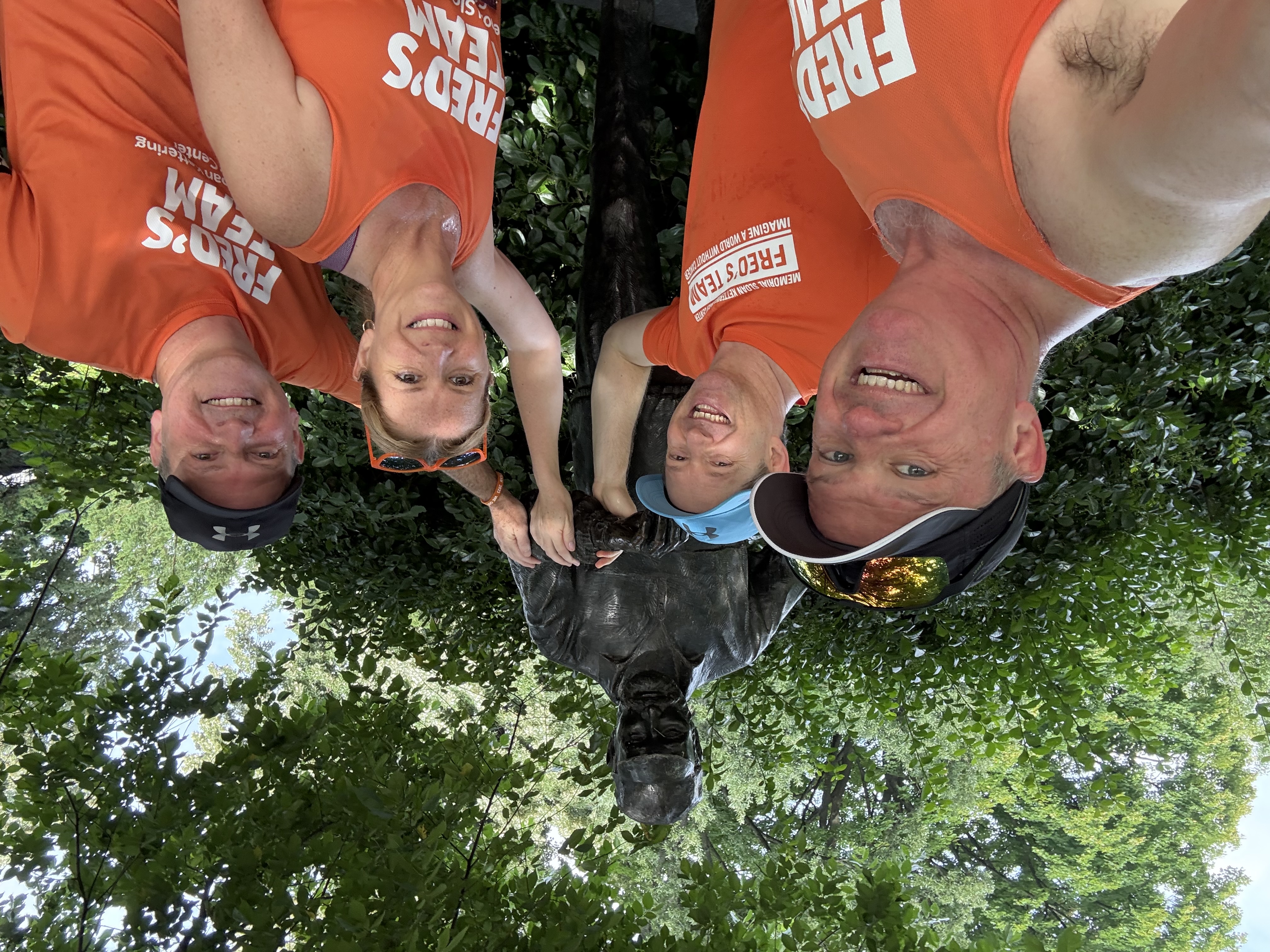
Every dollar goes to Memorial Sloan Kettering, and every mile in this block is what gives the ask its weight. The training and the fundraising are the same effort.
Nine weeks. Six of them real. Get the easy runs easy, get the long runs done, and go ask one more person. If you want to see what the rest of the plan looks like, it is on our training page. If you would rather support the team than run with it, you can donate here.